
No products in the cart.
Live Plants & Neutrients, Plants, Potted

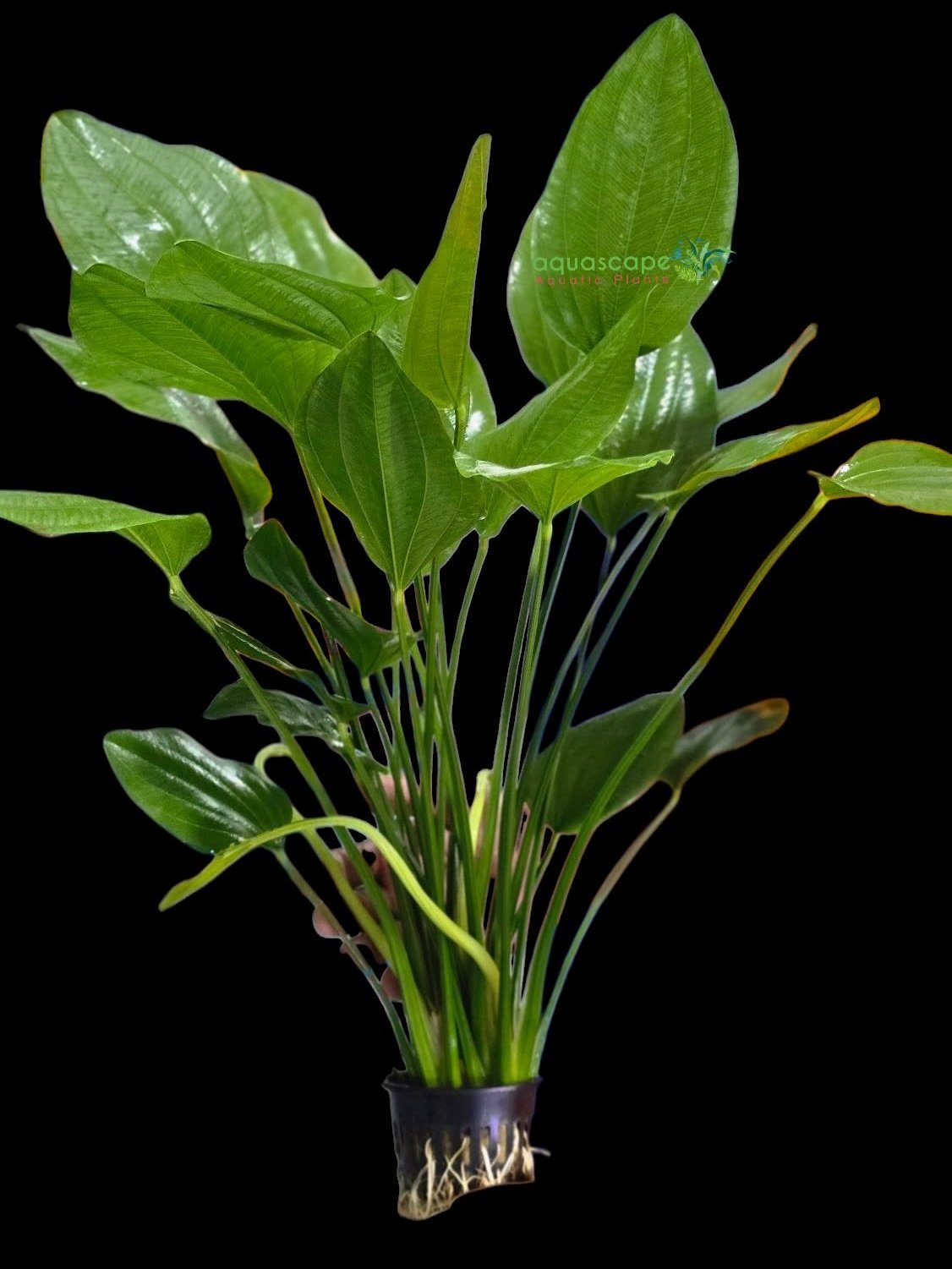
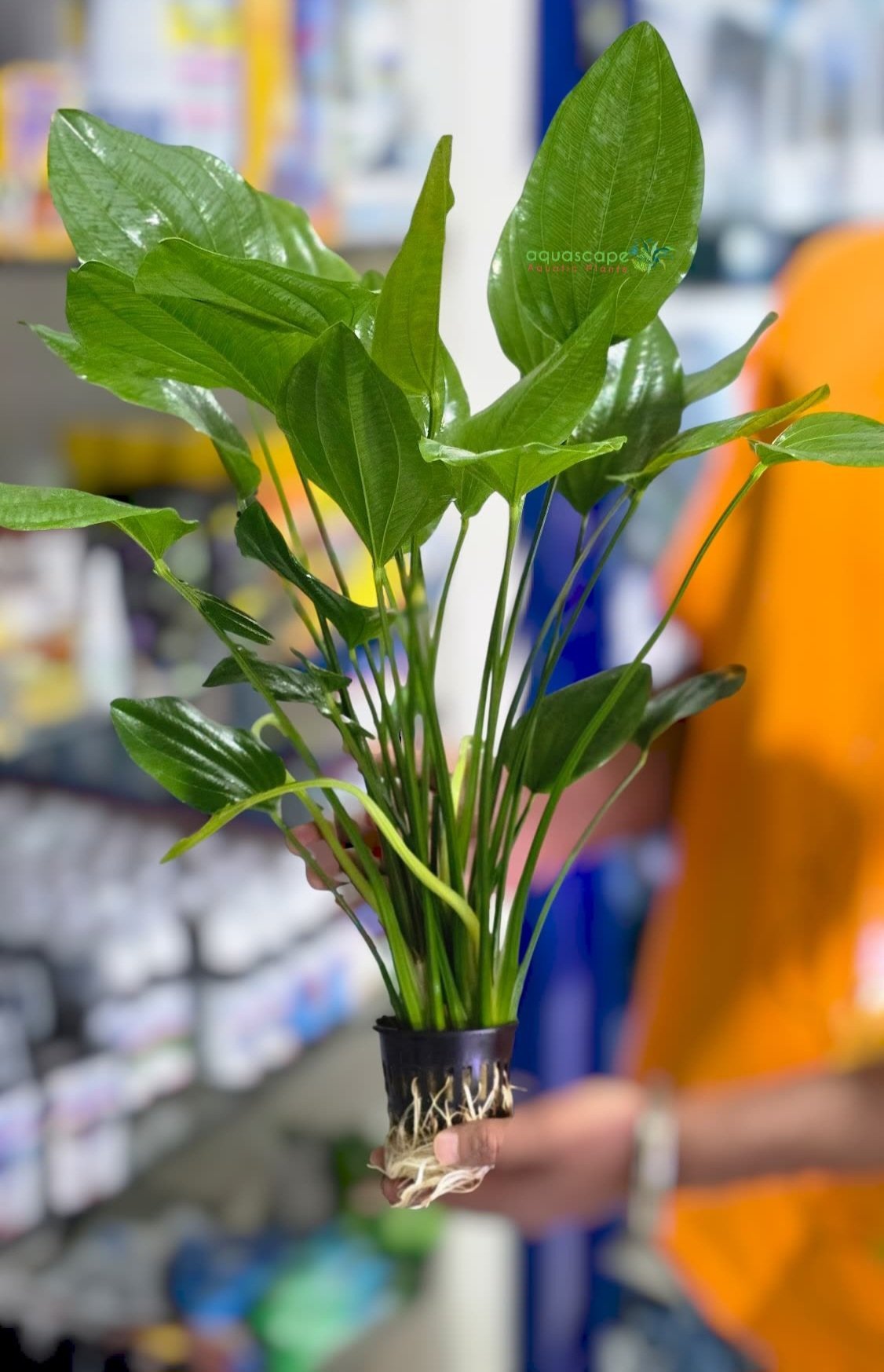
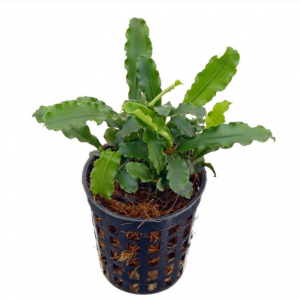
Echinodorus argentinensis Mother Plant XXXL 80cm high
Availability:
Out of stock
Echinodorus argentinensis is a species of aquatic plant in the Alismataceae family, native to South America (Argentina, Brazil, Paraguay, and Uruguay). It is a robust, semi-aquatic or aquatic plant often used in ponds and large aquariums due to its impressive size and attractive foliage.
Description:
Leaves: Broad, lanceolate to oval, with prominent veining. Mature leaves can grow up to 12-18 inches (30-45 cm) long.
Color: Bright to dark green, sometimes with a slightly wavy edge.
Growth Form: Rosette-forming, with long petioles (leaf stems) emerging from a central root crown.
Size: Can reach up to 20-24 inches (50-60 cm) in height when fully grown.
Flowers: Produces tall inflorescences with small white flowers when grown emersed (above water).
Root System: Strong, fibrous roots that anchor well in substrate.
Care Tips:
Lighting:
Moderate to high light is ideal for healthy growth.
Can tolerate lower light but may grow more slowly and produce smaller leaves.
Water Parameters:
Temperature: 68-82°F (20-28°C).
pH: 6.5-7.5 (slightly acidic to neutral preferred).
Hardness: Soft to moderately hard water (2-15 dGH).
Substrate:
Nutrient-rich substrate (such as aquarium soil or clay-based gravel) promotes vigorous growth.
Root tabs or liquid fertilizers help if the substrate is inert.
CO2 & Fertilization:
Benefits from CO2 supplementation but can grow well without it.
Regular fertilization (iron-rich fertilizers) prevents yellowing leaves.
Pruning & Maintenance:
Remove old, decaying leaves to encourage new growth.
Large specimens may need thinning if they overshadow other plants.
Propagation:
Produces adventitious plantlets on flower stalks when grown emersed.
Can also be divided by splitting the root crown.
Special Considerations:
Best suited for larger aquariums or ponds due to its size.
Can be grown emersed in paludariums or bog setups, where it may flower.
Relatively undemanding but appreciates stable water conditions.
Would you like recommendations for tankmates or compatible plants?
د.إ79.00
Sold out!
How to Grow Echinodorus argentinensis
This robust aquatic plant thrives in both aquariums and pond settings. Below is a step-by-step guide to growing it successfully.
1. Planting
Substrate & Potting
Use a nutrient-rich substrate (aquarium soil, clay-based gravel, or sand mixed with root tabs).
Plant the roots gently, burying the crown (where leaves emerge) just above the substrate to prevent rot.
For ponds, plant in aquatic planting baskets with loamy soil topped with gravel to prevent cloudiness.
Spacing
Space plants 8-12 inches apart (20-30 cm) to allow room for growth.
In aquariums, place it as a background or centerpiece plant due to its large size.
2. Water & Environmental Conditions
Aquarium Setup
Temperature: 68–82°F (20–28°C).
pH: 6.5–7.5 (slightly acidic to neutral).
Hardness: Soft to moderately hard (2–15 dGH).
Water Flow: Moderate (avoids stagnant water but doesn’t need strong currents).
Pond Setup
Plant in shallow areas (up to 12–18 inches deep).
Can tolerate partial submersion (emersed growth promotes flowering).
3. Lighting
Moderate to high light (at least 6–8 hours daily).
In low light, growth slows, and leaves may remain smaller.
LED or full-spectrum aquarium lights work well.
4. Fertilization & CO₂
Root tabs (insert near roots every 3–6 months).
Liquid fertilizers (especially iron & potassium) to prevent yellowing.
CO₂ supplementation (optional but enhances growth).
5. Maintenance & Pruning
Remove old/damaged leaves to encourage new growth.
Trim flower stalks if propagating or to focus energy on foliage.
Divide large clumps by carefully splitting the root crown.
6. Propagation
Adventitious plantlets: Small plants grow on flower stalks (cut and replant).
Rhizome division: Split mature plants at the roots (ensure each section has leaves and roots).
7. Common Issues & Solutions
| Problem | Cause | Solution |
|---|---|---|
| Yellowing leaves | Nutrient deficiency (iron, potassium) | Use root tabs or liquid fertilizers |
| Melting leaves | Sudden water changes | Stabilize parameters, trim affected leaves |
| Slow growth | Low light or CO₂ | Increase light intensity or add CO₂ |
| Algae on leaves | Excess light/nutrients | Reduce lighting duration, add algae eaters (e.g., snails, shrimp) |
8. Best Tankmates & Companion Plants
Fish: Peaceful community fish (tetras, gouramis, angelfish) or herbivores (Bristlenose plecos). Avoid plant-nibblers like goldfish.
Shrimp & Snails: Amano shrimp, Nerite snails (help clean algae).
Companion Plants:
Tall background plants (Vallisneria, Hygrophila).
Midground plants (Cryptocoryne wendtii, Anubias).
Final Tips for Success
✔ Stable water conditions prevent melting.
✔ Regular fertilization keeps leaves vibrant.
✔ Prune periodically to maintain shape.
✔ In ponds, protect from extreme cold (hardy but may die back in frost).
Brand
aquascape plants
Based on 0 reviews
Be the first to review “Echinodorus argentinensis Mother Plant XXXL 80cm high”
Related products
- Sold out!Plants, Tissue Culture Cup
Aquascapeplants Hygrophila pinnatifida
Maharashtra, Goa, Karnataka, Tamil Nadu are the states in India where Hygrophila pinnatifida is commonly found. However in the books its origin is from North India state of India, Uttar Pradesh.
- 3x times more plant quantity than other leading brands..
- Artistic leave pattern
- To artistic to be believed real
- Can be planted in soil or attached to the hardscape
- Relatively easy to grow and care
Synonyms Nomaphila pinnatifida Dalzell, Cardanthera pinnatifida (Dalzell) Benth. ex C.B.Clarke . Complete botanical name Hygróphila pinnatífida (Dalzell) Sreem. Family Acanthaceae Genus Hygrophila Difficulty medium Usage Epiphyte (growing on hardscape), Semi-emersed plant for open tanks, Midground, Foreground, group Height 5 – 40cm Width 10 – 30cm Growth medium Buy 5 or more for additional discount!
Buy 10 or more to get super discount!
SKU: n/a - Sold out!Plants, Tissue Culture Cup
Aquascapeplants Rotala macrandra Japan
Rotala macrandra also known as giant red rotala is a beautiful red stem plant with distinctive wavy leaves.
- Red color stem plant
- Have distinctive wavy leaves
- Great contrast with green plants
common names Giant Red Rotala Complete botanical name Rotála macrándra Koehne Family Lythraceae Genus Rotala Difficulty medium Usage Accent (red), Background, Midground, Street (Dutch style) Aquascaping very colourful plant for accents Growth fast pH value 4 – 7 Rotala macrandra Japan: The Aquatic Jewel for Your Aquarium
Description: Elevate the beauty of your aquarium with Rotala macrandra Japan, a stunning aquatic plant known for its vibrant red and pink hues. This plant is perfect for creating a striking focal point in your tank and is favored by aquarists for its eye-catching appearance.
Key Features:
- Vibrant Colors: Boasts striking red and pink foliage that adds a pop of color to any aquarium setup.
- Ideal for Aquascaping: Its delicate, fine leaves create a beautiful contrast with other plants, making it perfect for detailed aquascapes.
- Moderate Care: Thrives in well-maintained aquariums with high light levels and CO2 supplementation, making it suitable for intermediate to experienced aquarists.
- Growth: Grows best in nutrient-rich substrates and benefits from regular pruning to maintain its shape and promote bushier growth.
- Available in the UAE: Easily accessible for aquarium enthusiasts in the United Arab Emirates, ensuring you can add this exquisite plant to your collection.
 SKU: n/a
 - Sold out!Plants, Potted
Aquascapeplants Bucephalandra wavy green
Size: Pot
Bucephalandra wavy green is an undemanding and easy to grow plant. If provided with co2 and light the plants comes to its best state.
Fastest growing Bucephalandra
Leaf margins are wavy
Very undemanding
Nice looking plant
Can be attached to hardscape

Bucephalandra – The Perfect Aquarium Plant for Unique AquascapesBucephalandra is a highly sought-after freshwater aquarium plant, loved for its striking foliage, slow growth, and ability to thrive in a variety of conditions. Native to Borneo, this epiphytic plant is perfect for creating natural, lush aquascapes.
Available in various species with diverse leaf shapes and colors ranging from deep green to bluish hues, Bucephalandra is ideal for attaching to driftwood, rocks, or other hardscapes. It thrives in low to moderate light, making it an excellent choice for low-tech and high-tech aquariums alike.
Easy to maintain and adaptable to a range of water parameters, Bucephalandra is a favorite among hobbyists looking for a hardy, visually stunning plant. Its ability to flourish in shaded areas also makes it perfect for layered aquascaping designs.
SKU: n/a - Sold out!Plants, Potted
Aquascapeplants Rotala var.’Pearl’
Size: Price Per Stem
Rotala var.’Pearl’ is a beautiful aquatic plant that is majorly found in Pakistan, India and Nepal.
Tiny leaves ideal for nano or even larger scapes
Ideal to be placed foreground or midground
Recommended to use co2 and plant neutrient Easylife Profito along with Easylife Ferro Iron.SKU: n/a



There are no reviews yet.