
Plants
Showing 193–207 of 207 results
-
Plants, Tissue Culture Cup
Schismatoglottis prietoi – Compact Aquatic Beauty for Nano Tanks & Aquascapes
-10% Plants, Tissue Culture Cup
Schismatoglottis prietoi – Compact Aquatic Beauty for Nano Tanks & Aquascapes
Schismatoglottis prietoi is a versatile, low-maintenance aquatic plant ideal for aquascaping and nano tanks. It thrives in low light and spreads easily, making it perfect for beginners and pros alike.
Schismatoglottis prietoi – Compact Aquatic Beauty for Nano Tanks & Aquascapes
Schismatoglottis prietoi, a rare aquatic plant from the Philippines. Ideal for low-tech aquariums, it thrives in low light and adds lush greenery to any aquascape.
Add a touch of tropical elegance to your aquarium with Schismatoglottis prietoi, a compact and undemanding aquatic plant native to the Philippines. With soft, elliptic green leaves and a growth habit similar to Anubias, this plant is perfect for foreground placement or attaching to hardscape elements like rocks and driftwood. Its ability to propagate via runners makes it a favorite among aquascapers seeking lush, natural layouts.
Ideal for nano tanks and low-tech setups, Schismatoglottis prietoi flourishes in low to medium light and requires minimal CO₂ supplementation. Whether you’re a beginner or a seasoned aquascaper, this plant offers vibrant greenery and easy maintenance.
Key Features:
– Origin: Philippines
– Light Demand: Low to Medium
– Temperature: 20–28°C
– pH Range: 6–8
– Growth Rate: Slow to Medium
– Placement: Foreground or attached to hardscape
– Propagation: Runners
—
🌱 Care & Growth Tips
1. Lighting:
Low to medium light is sufficient. Avoid intense lighting, which may cause algae buildup on leaves.
2. Substrate & Placement:
Plant directly into nutrient-rich substrate or attach to rocks and driftwood. It adapts well to both rooted and epiphytic growth styles.
3. Water Parameters:
– Temperature: 20–28°C
– pH: 6–8
– Hardness: Soft to hard water
– CO₂: Optional but beneficial (10–20 mg/L)
4. Watering (for emersed setups):
If grown emersed in terrariums or paludariums, water lightly every 9 days in moderate humidity.
5. Fertilization:
Use liquid fertilizers or root tabs to support healthy growth, especially in low-tech tanks.
6. Pruning & Propagation:
Trim runners to control spread and encourage bushier growth. It propagates easily, making it ideal for creating dense foreground carpets.
7. Compatibility:
Pairs well with other low-light plants like Anubias, Bucephalandra, and Cryptocoryne. Safe for shrimp and peaceful fish.
SKU: n/a -
Potted
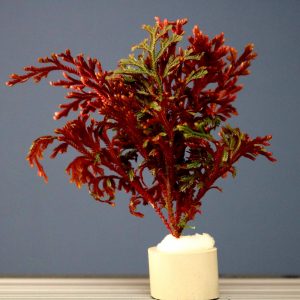
Selaginella Erythropus Ruby Red Club Moss
Selaginella erythropus sanguinea also known as Ruby Red Club Moss is a spectacular looking moss with red and green contrasting colors. Ruby red moss is perfect choice for vivariums and aqua terrarium setups. When ideal condition for the plant the Ruby red moss will have ruby red color underside and contrasting with dark green color on the surface.
Ruby Red Moss needs shaded area with high humidity.
Kindly note that the Ruby red moss is not an aquarium plants and should be always grown emerged.
SKU: n/a -
Plants, Potted
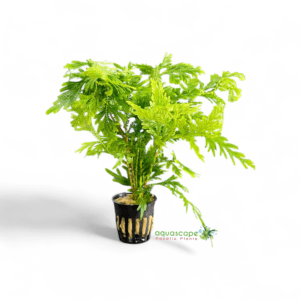
Selaginella wildenowii Peacock fern
Selaginella are evergreen rhizomatous, mat-forming perennials. They may be small and tufted, or tall and scrambling, with slender stems covered with small scale-like leaves – often fernlike. They develop spores in short terminal spikes. There are many different varieties, and they vary hugely in size, and in the way they grow. Most like high humidity. Willdenow’s spikemoss changes colour depending on the light, from greens to blue-greens
🌿 Selaginella willdenowii (Peacock Fern) — Description & Care Guide
✨ Description
Selaginella willdenowii, commonly called Peacock Fern or Willdenow’s Spikemoss, is a rainforest-floor plant famous for its iridescent blue‑green foliage. The metallic shimmer changes with light angle, giving it an almost bioluminescent look. Despite the name, it is not a true fern but a lycophyte, an ancient plant lineage.Key features:
– Electric blue/turquoise sheen on leaves
– Fan‑like, lacy fronds with scale-like leaves
– Creeping or vining growth habit
– Typically grows 30 cm tall and spreads up to 50 cm
– Native to humid, shaded tropical forests of Southeast Asia—
🌱 Care Requirements
💡 Light
– Prefers bright, indirect light.
– Avoid direct sun, which can burn leaves; the plant’s iridescence helps diffuse light in nature.💧 Water
– Keep soil consistently moist but not waterlogged.
– High moisture is essential; never allow the substrate to fully dry.
– Weekly watering is typical, but frequency depends on humidity and potting mix.🌡️ Temperature
– Thrives in warm conditions, around 25°C.
– Avoid cold drafts or temperatures below 18°C.💨 Humidity
– Requires very high humidity (around 80%).
– Ideal for terrariums, paludariums, or enclosed environments.
– Regular misting helps maintain moisture.🌱 Soil
– Prefers loamy, well‑draining, very moist soil.
– A mix for ferns or tropical plants works well.🌿 Fertilizer
– Light feeding during the growing season with a diluted balanced fertilizer.
– Avoid heavy fertilization, as the plant is sensitive.✂️ Pruning
– Trim leggy or damaged growth to maintain shape and encourage fullness.🌱 Propagation
– Propagates via stem cuttings placed in moist substrate under high humidity.
– Roots form readily when conditions are warm and damp.—
🧭 Ideal Placement
– Terrariums
– Shaded indoor shelves
– Humid plant cabinets
– Vivariums with reptiles or amphibians (non-toxic and humidity-loving)This is a land moss to be grown immersed and not recommended for under water.
SKU: n/a -
Indoor Plants, Live Plants & Neutrients, Plants for terrarium, Potted
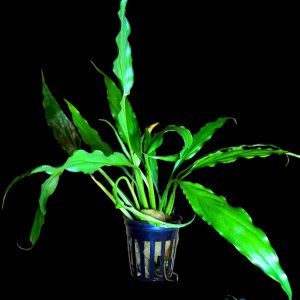
Spathiphyllum Wallisii for terrarium/ aquarium surface
 Indoor Plants, Live Plants & Neutrients, Plants for terrarium, Potted
Spathiphyllum Wallisii for terrarium/ aquarium surface
Our Spathiphyllum Wallisii plant is not regular house plant. The plant is adopted to grow its roots in water without any soil. The plant can be best used to the surface of the aquarium so it can draw nutrients form water. The plant can also be used in terrariums.
SKU: n/a -
Plants, Potted
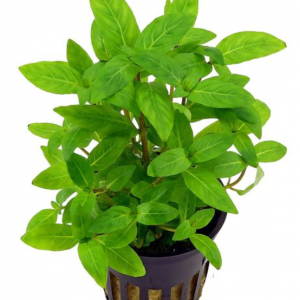
Staurogyne repens
Staurogyne repens
- Can be used as bush or compact carpet
- Slow grower
- Ideal to be placed between rocks
- Most popular aquascaping plants
Synonyms Ebermaiera repens Nees Complete botanical name Staurogyne répens (Nees) Kuntze Family Acanthaceae Genus Staurogyne Difficulty medium Usage Midground, Nano tanks, Foreground, group, Foreground, ground cover Aquascaping well-branched, bushy Growth medium pH value 5 – 7 SKU: n/a -
Live Plants & Neutrients, Plants, Potted
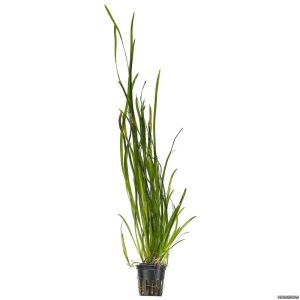
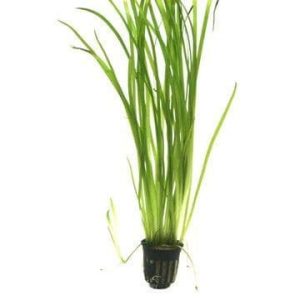
Vallisneria americana Aquatic Plant
Vallisneria americana
- Also known as Vallisneria gigantea and V. americana “Gigantea”
- Very long, broad, ribbon-shaped leaves
- Green to reddish coloration
- Undemanding plant for large tanks
- Useful to create a jungle-like atmosphere
Genus Vallisneria Difficulty easy Growth fast pH value 6 – 8 Temperature tolerance 4 – 32°C Carbonate hardness 2 – 21°dKH Propagation Runners Can grow emersed? no We make sure all our live stock are kept with highest living standards with proper aquarium water care. Our fishes are quarantined before they are introduced to the store display aquariums. We make sure we sell healthy live fish and not parasites.
NOTE: OUR LIVE FISHES ARE ONLY DELIVERED TO DUBAI AND SHARJAH.
CUSTOMERS FROM ABUDHABI AND OTHER EMIRATE MAY CONTACT US TO INQUIRE ABOUT THE DELIVERY.
BUY MORE SAVE MORE!
Buy 6 or more for additional discount!
Buy 12 or more to get super discount!
SKU: n/a -
Plants, Potted
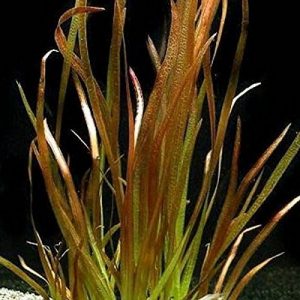
Vallisneria spiralis ‘Red’

Vallisneria spiralis “Red” is a hardy plant suitable for the beginner hobbyist. It makes little demands in the aquarium and can grow fast when conditions are optimal. It also looks the best and adapts the most out of all other Vallis
Family Hydrocharitaceae Genus Vallisneria Type Stolon Origins Can be found in tropical and sub-tropical regions worldwide. Color Green Placement Background Dificulty Easy Growth Rate Fast Lighting Low Size 30 – 50 cm CO2 Low SKU: n/a -
-
Floaters, Potted, Soil & Substrates, Terrarium Products, Terrariums, Tissue Culture Cup
WabiKusa Ball
 Floaters, Potted, Soil & Substrates, Terrarium Products, Terrariums, Tissue Culture Cup
WabiKusa Ball
Size: 7-8cm
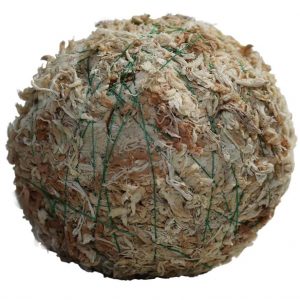
Aquascape WabiKusa Balls are the perfect start for the Japanese plant art of wabikusa. Our specialized wabikusa ball is ready to plant and has ideal mix of nutrients to ensure long-term growth of your aquatic and terrarium plants. The Aquascape Wabi Kusa Ball has a special layer that hold and retains water and moister that is needed for aquatic plants to thrive and grow.
WabiKusa is the art of arranging different aquatic plants growing on a substrate medium in the shape of a ball. The term “wabi-sabi” in Japanese, means something that is natural yet imperfect in which one can find beauty. The simple elegance of nature and it’s a tendency to stray from symmetry is the key to a beautiful wabi-kusa setup.SKU: n/a -
Plants, Potted
Water Star Pogostemon stellatus
Water Star Pogostemon stellatus
- Fine-leaved large stem plant
- Reddish-purple to orange colours
- Eyecatcher for plant
Family Lamiaceae Genus Pogostemon Difficulty difficult Usage Background, Midground Growth fast pH value 5 – 7 Temperature tolerance 15 – 32°C Carbonate hardness 1 – 18°dKH General hardness 0 – 30°dGH Propagation Cuttings Can grow emersed? yes SKU: n/a -
Live Plants & Neutrients, Plants, Potted, Uncategorized
Weeping moss in a bag
Weeping moss (Vesicularia ferriei) is an aquatic plant commonly found in aquariums1. It is known for its distinctive downward-sloping growth pattern, which gives it a weeping or cascading appearance123. This plant has become popular in aquascaping due to its attractive deep green color and fine texture1. Weeping moss typically grows to a height of approximately one inch.
Weeping moss belongs to the family Hypnaceae and is a pleurocarpous plant3. It does not have true roots but rather uses rhizoids to attach itself to surfaces like driftwood or rocks3. It can thrive in a range of lighting conditions, from low to bright light levels, although it will grow faster with moderate light levels1. This moss can also benefit from added fertilizers and CO2 supplements to promote healthy growth.
Overall, weeping moss is a hardy aquatic plant that can add visual interest to aquariums and aquatic setups
To care for weeping moss, you need to consider the following requirements:
- Lighting: Weeping moss can survive in low to bright light environments but will grow faster with moderate light levels.
- Water quality: It thrives in temperatures ranging from 60 to 85 degrees Fahrenheit and a pH of 5.0 to 6.0. A frequent water flow around the aquarium is necessary to sustain proper growth by continuous circulation of nutrients to all parts of the aquarium.
- Aquarium setup: Weeping moss doesn’t require specialty aquarium lights but needs to be attached to driftwood or rock for proper growth. It doesn’t have true roots but anchors itself with rhizoids.
- Nutrient supply: Weeping moss can survive without supplements and fertilizers, but it’s beneficial to add fertilizers and CO2 supplements to promote healthy growth.
Weeping moss is a hardy plant that’s relatively easy to maintain but requires a keen eye for proper care.
SKU: n/a -
Plants, Tissue Culture Cup
Aquascapeplants Micranthemum Montecarlo
Aquascapeplants Micranthemum ‘Monte carlo’ grows compact close to the ground, making it one of the most use carpeting plant.
Nice plant for foreground cover
Relatively less demanding
Forms compact lush growth
Can be grown overhanging
Can form a carpet layer upto 4cm

SKU: n/a