No products in the cart.

Plants
Showing 169–192 of 203 results
- Plants, Potted
Nymphaea micrantha bulb Aquatic Plant
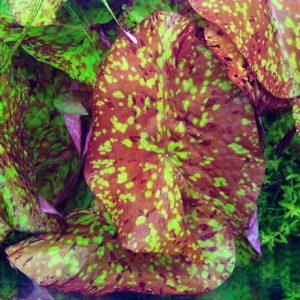
N. micrantha, like all plants in the Nymphaea genus, is a water lily that sprouts submersed and floating leaves. Two forms of this species exist in the hobby: one with subtly-variegated greenish, reddish, and brownish leaves, and another with smaller, bright green leaves that feature reddish brown spots (see pictured). Though the former type was the first to be imported and cultivated, it is quickly being displaced by the latter, which is a bit more agreeable (and somewhat smaller-growing) in the aquarium. Regardless of type, however, all specimens of N. micrantha require intense light and a nutritious substrate to achieve robust and healthy growth.
SKU: n/a - Sold out!Plants, Potted
Nymphoides aquatica Aquarium banana plant
Nymphoides aquatica Aquarium banana plant
Origin North America Position Foreground Height Varies according to nutrient availability Width Varies according to nutrient availability Difficulty Easy Growth Rate Medium Substrate Sand, gravel or soil pH 6 – 7.2 Lighting Low – High Ideal Temperature 68-81°F (20-27°C) Carbonate Hardness (KH) 5-12 dKH To learn more about this plant visit our special article on Banana Plant
SKU: n/a - Sold out!Plant Fertilizers, Plants, Potted, Tissue Culture Cup
Oase ScaperLine Plant Boost Tablets
- Complete trace nutrient package
- Promotes plant growth
- Nitrogen, phosphate and potassium
- Long-term release of nutrients
The ScaperLine Plant Boost tablets from Oase are fertiliser capsules for the substrate. They cause a long-term release of nutrients in the aquarium and support plant growth directly at the root.
- Acts directly on the roots
- Long-term release of nutrients
- Strengthens the growth of aquatic plants
- With nitrogen, phosphate and potassium
- 22,9×8,3 mm in size
SKU: n/a - Sold out!Live Plants & Neutrients, Plants, Potted
Ophiopogon Japonica pot
Characterized by beautiful green blades that resemble a lush lawn of grass, Ophiopogon Japonicus is a great bog plant originating from Asia. This particular plant species is not a true aquatic plant and should be kept in terrariums, paludariums or any other high-humidity setup. Mondo Grass does not require too much lighting and is partial to shaded areas as well. We would recommend using it as a background plant choice in a pond/bog style planted aquarium. When provided with good care, Ophiopogon Japonicus will reward you with dense tufts of beautiful growth.
SKU: n/a - Sold out!Plants, Potted
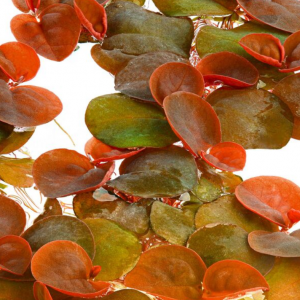
Phyllanthus fluitans Red root floater
Size: 1 bag approx 50 floaters
Phyllanthus fluitans Red root floater
- Attractive floater from South America
- Round leaves
- Red coloration under strong lighting
- Finely branched red roots
- Recommendable for open tanks
Common names Red root floater Complete botanical name Phyllánthus flúitans Benth. ex Müll.Arg. Family Phyllanthaceae Genus Phyllanthus Difficulty medium Usage Water surface Growth fast pH value 5 – 8 Temperature tolerance 18 – 30°C SKU: n/a - Sold out!
- Plant Fertilizers, Plants
Plant Growth boost fertilizer Profito 1L All-in-One
Size:1000ml
PROFITO Professional plant food
Easy-Life ProFito is an all-in-one, universal plant food which is suitable for all water plants in aquaria. The composition of ProFito ensures strong, healthy and lush plant growth. Thanks to the optimal composition of the ingredients, plants have everything they need for unhindered, strong and lush growth.
Advantages of Easy-Life ProFito
Highly concentrated, all-in-one, universal plant food
All the necessary nutrients in a single product, such as iron, potassium and manganese
Strong, healthy and lush plant growth
Promotes the production of cytokinins, which stimulates the division of cells
Produces wider leaves and intense colours
Improves and consolidates the biological balance in the aquarium
Contains no nitrates or phosphates
Extremely economical to useSKU: n/a - Plant Fertilizers, Plants
Plant Growth boost fertilozet Profito 500ml All-in-One
Size:500ml
PROFITO Professional plant food
Easy-Life ProFito is an all-in-one, universal plant food which is suitable for all water plants in aquaria. The composition of ProFito ensures strong, healthy and lush plant growth. Thanks to the optimal composition of the ingredients, plants have everything they need for unhindered, strong and lush growth.
Advantages of Easy-Life ProFito
- Highly concentrated, all-in-one, universal plant food
- All the necessary nutrients in a single product, such as iron, potassium and manganese
- Strong, healthy and lush plant growth
- Promotes the production of cytokinins, which stimulates the division of cells
- Produces wider leaves and intense colours
- Improves and consolidates the biological balance in the aquarium
- Contains no nitrates or phosphates
- Extremely economical to use
SKU: PR1002 - Accessories, Floaters, Indoor Plants, Live Plants & Neutrients, Plants, Plants for terrarium, Potted, Tissue Culture Cup
Plant Tie 16pcs
-15% Accessories, Floaters, Indoor Plants, Live Plants & Neutrients, Plants, Plants for terrarium, Potted, Tissue Culture Cup
Plant Tie 16pcs
Size: 13cm 16pcs
Aquascape plant tie is ideal to use when attaching plants to drift wood. It helps to keep the plants upright and prevents them from falling or getting damaged. They provide gentle support while allowing the plant to grow and develop naturally.SKU: n/a - Sold out!Plants, Potted
Proserpinaca palustris ‘Mermaid weed’
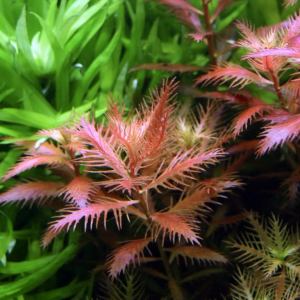
Mermaid weed
- Light green to intense red in colour
- Dense foliage
- Comb-like divided leaves
- Upright growth habit
Difficulty medium Usage Accent (red), Background, Midground Aquascaping very colourful plant for accents Growth medium pH value 5 – 7 Temperature tolerance 10 – 28°C Carbonate hardness 0 – 18°dKH General hardness 0 – 30°dGH Propagation Cuttings Can grow emersed? yes SKU: n/a - Plants, Potted
Riccardia sp. “chamedryfolia” Coral moss
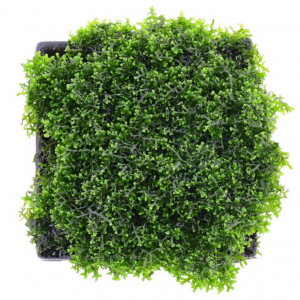
- Forms compact yet delicate cushions
- Attaches itself to the hardscape
- Very popular in aquascaping
Genus Riccardia Difficulty easy Usage Epiphyte (growing on hardscape), Nano tanks Growth slow pH value 5 – 7 Temperature tolerance 18 – 28°C Carbonate hardness 0 – 14°dKH General hardness 0 – 30°dGH Propagation Splitting, cutting off daughter plants Can grow emersed? yes SKU: n/a - Live Plants & Neutrients, Plants, Potted
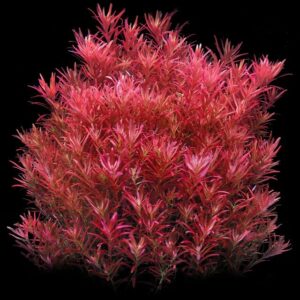
Rotala Blood Red
Rotala rotundifolia Blood red ‘Singapore’ is a real eye-catcher as an about 20 – 40 cm high bush in the midground and background. It contrasts particularly well with light green plants and adds a rich red tone to the varied shades of R. rotundifolia forms.
- Newest plant offering from aquascapeplants
- Also called Rotala “Blood Red Singapore”
- The Rotala rotundifolia form with the richest red
- Forms a striking colour accent
- No high demands
‘Singapore Blood Red’, also “Blood Red Singapore”, certainly has the most intense red colouring of all Rotala rotundifolia forms. Under the same conditions, this Rotala has a darker red shade than R. rotundifolia ‘Colorata’. As with “normal” Rotala rotundifolia, the shoots grow mostly upright to ascending, in very strong light also more or less horizontally. As with “normal” Rotala rotundifolia, the shoots grow to over 50 cm long, but look better if they are kept about 20 – 40 cm high by cutting and replanting cuttings. They branch quite well, the bushy growth is promoted by occasional pruning.
This splendid red stem plant shares fast growth and easy culture with other forms of round-leaved Rotala. It still grows in moderate lighting and without added CO2, but looks best with strong light, added CO2 and complete macro and micronutrient fertilisation through the water column. Propagation is easy via head cuttings and side shoots.
SKU: n/a - Sold out!Live Plants & Neutrients, Plants, Potted
Rotala bonsai Aquascapeplants
Rotala bonsai from aquascape plants is a gorgeous little stem plant, and it fits perfectly with your eye for refined aquascaping. Here’s a clean, complete breakdown you can use for product descriptions, care guides, or customer education.
—
🌿 Aquascapeplants Rotala Bonsai
(Rotala indica ‘Bonsai’ / Ammannia sp. ‘Bonsai’)Overview
Rotala bonsai is a compact, slow‑growing stem plant prized for its tiny round leaves, dense structure, and miniature tree‑like appearance. It’s ideal for nano tanks, detailed foreground layouts, and high-end aquascapes where precision and texture matter. When grown well, it forms tight bushes with vibrant green to orange hues.—
🌱 Key Features
– Leaf shape: Small, rounded, thick leaves
– Growth habit: Upright stems that stay compact
– Color: Bright green under low light; orange to reddish under strong light
– Placement: Foreground to midground
– Growth speed: Slow to moderate
– Difficulty: Medium (requires stable conditions)—
💧 Care Requirements
Light
– Medium to high light is ideal.
– High light brings out orange/red tones and tighter internodes.
– Low light = greener, looser growth.CO₂
– Strongly recommended.
– With CO₂, it becomes denser, more colorful, and easier to shape.
– Without CO₂, growth is slow and may become leggy.Water Parameters
| Parameter | Ideal Range |
|———-|————-|
| Temperature | 22–28°C |
| pH | 6.0–7.2 |
| GH | 4–10 |
| KH | 1–6 |Soft, slightly acidic water gives the best coloration and compactness.
Nutrients
– Needs consistent macro and micro fertilization.
– Iron helps intensify orange/red tones.
– Clean water and stable parameters prevent melting.—
✂️ Trimming & Shaping
This is where Rotala bonsai becomes truly “bonsai.”– Trim frequently to encourage side shoots and bushy growth.
– Top‑cutting works best: cut 3–5 cm above the substrate.
– Replanting tops is optional; the base will sprout new shoots.
– For a “mini tree” effect, trim the sides and let the top dome naturally.—
🌿 Placement in Aquascapes
– Foreground bushes in Iwagumi layouts
– Midground clusters behind stones
– Nano tanks where scale matters
– Perfect for creating miniature hedges or tree-like moundsSKU: n/a - Sold out!Plants, Potted
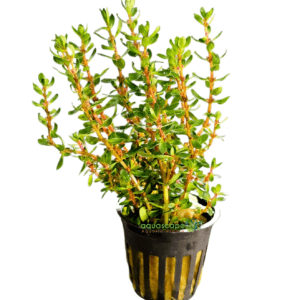
Rotala indica super red
True Rotala indica is not very well-known as aquarium plant. At the moment is it labeled as Ammania sp. “Bonsai” and Rotala sp. “Bonsai” as the trade names, but its flowers have helped identify it correctly as R. indica.
- Small leaves sit densely on the stems
- Strictly upright, little ramification
- Shoot tips often reddish
Difficulty medium Usage Midground, Nano tanks, Street (Dutch style), Foreground, group Growth medium pH value 5 – 7 Temperature tolerance 18 – 30°C Carbonate hardness 0 – 14°dKH General hardness 0 – 30°dGH Propagation Cuttings Can grow emersed? yes SKU: n/a - Sold out!Live Plants & Neutrients, Plants, Potted
Rotala macrandra “Green” (“Wavy”)
Rotala macrandra ‘Green’ is a relatively small, delicate variant of the species R. macrandra quite easy in cultivation. It has become known as R. macrandra “Wavy”. Compared with the standard form of R. macrandra, the leaves are relatively small, longer and greener. Under strong lights, they can be wide ovoid and assume nice reddish hues. Trimming the stems ensures a nice bushy growth. If you let Rotala macrandra ‘Green’ reach the water surface, emerged shoots will develop, with roundish, green, shiny leaves and flower spikes with whitish flowers.
- Relatively small-leaved
- Leaves are green to reddish
- Variable leaf shape, longish to ovate
SKU: n/a - Sold out!Plants, Potted
Rotala najean
Rotala sp. “Nanjenshan” is a fine-leaved plant with a very bushy growth habit. It comes from Taiwan, where it has only been found in one single location near the town of Nanjenshan. With its millimetre-thick lineal leaves it reminds a lot of Rotala wallichii, but unlike the latter, it is of a light green colour, sometimes with reddish shoot tips. Under lots of light, horizontal to overhanging lateral shoots will form.
- Bushy growth
- Fine-leaved
- LIght green to light pink hues
Difficulty medium Usage Midground Aquascaping fine-leaved Growth fast pH value 4 – 7 Temperature tolerance 4 – 32°C Carbonate hardness 0 – 21°dKH General hardness 0 – 30°dGH Propagation Cuttings Can grow emersed? yes SKU: n/a - Plants, Potted
Rotala Orange Juice Aquatic Plant
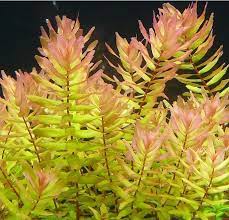
Rotala Orange Juice is a stunning and vibrant aquatic plant known for its bright orange and pink hues. It is a relatively new variety in the aquarium hobby and is highly sought after for its unique coloration. While it is more demanding than Rotala Green, with proper care, it can thrive and become a standout feature in your aquarium.
1. Overview of Rotala Orange Juice
- Scientific Name: Rotala rotundifolia ‘Orange Juice’
- Family: Lythraceae
- Origin: Cultivated variant (originating from Southeast Asia)
- Difficulty: Moderate to High
- Growth Rate: Moderate
- Light Requirements: High
- CO2 Requirements: High (CO2 supplementation is essential)
- Placement: Midground to Background
2. Tank Requirements
- Temperature: 72°F – 82°F (22°C – 28°C)
- pH: 6.0 – 7.0 (slightly acidic to neutral)
- Water Hardness: Soft to moderately hard (2-12 dGH)
- Substrate: Nutrient-rich substrate or root tabs for optimal growth
- Lighting: High lighting (4+ watts per gallon or 80+ PAR) to bring out its vibrant colors
- CO2: CO2 injection is highly recommended for healthy growth and intense coloration
SKU: n/a - Sold out!Live Plants & Neutrients, Plants, Tissue Culture Cup
Sagittaria subulata
- Grasslike fore- and middleground plant
- Forms dense groups
- Undemanding
- Can be used in many different ways
Sagittaria subulata arrowhead is an undemanding grass-like plant for the middle- and background that soon forms dense groups thanks to its underground runners. It may be a bit unpredictable, as it may form a quite short lawn with lots of light and limited nutrient supply, however it develops 30 cm long leaves when the population gets dense and macronutrient supply is good. The submerged leaves are strap-shaped and up to 5 mm wide. In the aquarium it can grow a long flower stalk if the conditions are good. Its small white flowers will open outside the water.
Genus Sagittaria Difficulty very easy Usage Background, Midground Aquascaping forms a grass-like lawn Growth fast pH value 5 – 9 Temperature tolerance 4 – 30°C Carbonate hardness 2 – 30°dKH General hardness 0 – 30°dGH Propagation Runners Can grow emersed? yes SKU: n/a - Floaters, Plants, Tissue Culture Cup
Salvinia auriculata in cup
- Rarely available
- Attractive floater from tropical Asia
- Under optimal conditions hood-like leaf shape
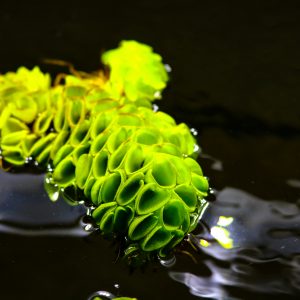
The “Asian watermoss” is also known as Salvinis cucullata is a very attractive floating fern species from tropical Asia where it occurs in sunny, still waters. Asian water moss is rarely available in trade and also not very well known among aquarium hobbyists.
Optimal growth conditions provided – plenty of light, rather high temperatures and nutrient-rich water – this Salvinia develops an interesting look with hood-like, rolled up leaves. It is scientifically named after that structure (from latin cucullus, cone or hood). With its side branches, the plant develops a dense floating mat with a comb-like look.SKU: n/a - Sold out!Plants, Tissue Culture Cup
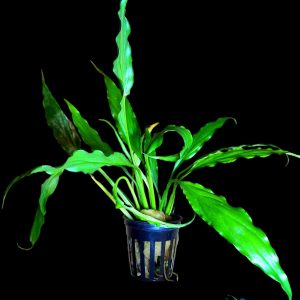
Schismatoglottis prietoi – Compact Aquatic Beauty for Nano Tanks & Aquascapes
-10%Plants, Tissue Culture CupSchismatoglottis prietoi – Compact Aquatic Beauty for Nano Tanks & Aquascapes
Schismatoglottis prietoi is a versatile, low-maintenance aquatic plant ideal for aquascaping and nano tanks. It thrives in low light and spreads easily, making it perfect for beginners and pros alike.
Schismatoglottis prietoi – Compact Aquatic Beauty for Nano Tanks & Aquascapes
Schismatoglottis prietoi, a rare aquatic plant from the Philippines. Ideal for low-tech aquariums, it thrives in low light and adds lush greenery to any aquascape.
Add a touch of tropical elegance to your aquarium with Schismatoglottis prietoi, a compact and undemanding aquatic plant native to the Philippines. With soft, elliptic green leaves and a growth habit similar to Anubias, this plant is perfect for foreground placement or attaching to hardscape elements like rocks and driftwood. Its ability to propagate via runners makes it a favorite among aquascapers seeking lush, natural layouts.
Ideal for nano tanks and low-tech setups, Schismatoglottis prietoi flourishes in low to medium light and requires minimal CO₂ supplementation. Whether you’re a beginner or a seasoned aquascaper, this plant offers vibrant greenery and easy maintenance.
Key Features:
– Origin: Philippines
– Light Demand: Low to Medium
– Temperature: 20–28°C
– pH Range: 6–8
– Growth Rate: Slow to Medium
– Placement: Foreground or attached to hardscape
– Propagation: Runners
—
🌱 Care & Growth Tips
1. Lighting:
Low to medium light is sufficient. Avoid intense lighting, which may cause algae buildup on leaves.
2. Substrate & Placement:
Plant directly into nutrient-rich substrate or attach to rocks and driftwood. It adapts well to both rooted and epiphytic growth styles.
3. Water Parameters:
– Temperature: 20–28°C
– pH: 6–8
– Hardness: Soft to hard water
– CO₂: Optional but beneficial (10–20 mg/L)
4. Watering (for emersed setups):
If grown emersed in terrariums or paludariums, water lightly every 9 days in moderate humidity.
5. Fertilization:
Use liquid fertilizers or root tabs to support healthy growth, especially in low-tech tanks.
6. Pruning & Propagation:
Trim runners to control spread and encourage bushier growth. It propagates easily, making it ideal for creating dense foreground carpets.
7. Compatibility:
Pairs well with other low-light plants like Anubias, Bucephalandra, and Cryptocoryne. Safe for shrimp and peaceful fish.
SKU: n/a - Potted
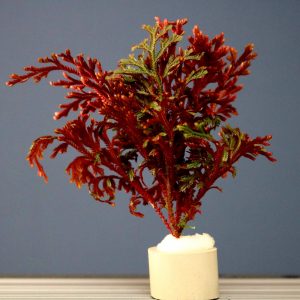
Selaginella Erythropus Ruby Red Club Moss
Selaginella erythropus sanguinea also known as Ruby Red Club Moss is a spectacular looking moss with red and green contrasting colors. Ruby red moss is perfect choice for vivariums and aqua terrarium setups. When ideal condition for the plant the Ruby red moss will have ruby red color underside and contrasting with dark green color on the surface.
Ruby Red Moss needs shaded area with high humidity.
Kindly note that the Ruby red moss is not an aquarium plants and should be always grown emerged.
SKU: n/a - Plants, Potted
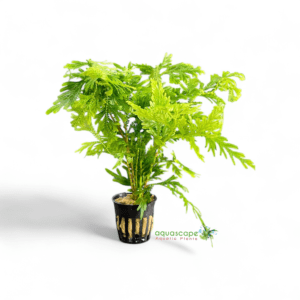
Selaginella wildenowii Peacock fern
Selaginella are evergreen rhizomatous, mat-forming perennials. They may be small and tufted, or tall and scrambling, with slender stems covered with small scale-like leaves – often fernlike. They develop spores in short terminal spikes. There are many different varieties, and they vary hugely in size, and in the way they grow. Most like high humidity. Willdenow’s spikemoss changes colour depending on the light, from greens to blue-greens
🌿 Selaginella willdenowii (Peacock Fern) — Description & Care Guide
✨ Description
Selaginella willdenowii, commonly called Peacock Fern or Willdenow’s Spikemoss, is a rainforest-floor plant famous for its iridescent blue‑green foliage. The metallic shimmer changes with light angle, giving it an almost bioluminescent look. Despite the name, it is not a true fern but a lycophyte, an ancient plant lineage.Key features:
– Electric blue/turquoise sheen on leaves
– Fan‑like, lacy fronds with scale-like leaves
– Creeping or vining growth habit
– Typically grows 30 cm tall and spreads up to 50 cm
– Native to humid, shaded tropical forests of Southeast Asia—
🌱 Care Requirements
💡 Light
– Prefers bright, indirect light.
– Avoid direct sun, which can burn leaves; the plant’s iridescence helps diffuse light in nature.💧 Water
– Keep soil consistently moist but not waterlogged.
– High moisture is essential; never allow the substrate to fully dry.
– Weekly watering is typical, but frequency depends on humidity and potting mix.🌡️ Temperature
– Thrives in warm conditions, around 25°C.
– Avoid cold drafts or temperatures below 18°C.💨 Humidity
– Requires very high humidity (around 80%).
– Ideal for terrariums, paludariums, or enclosed environments.
– Regular misting helps maintain moisture.🌱 Soil
– Prefers loamy, well‑draining, very moist soil.
– A mix for ferns or tropical plants works well.🌿 Fertilizer
– Light feeding during the growing season with a diluted balanced fertilizer.
– Avoid heavy fertilization, as the plant is sensitive.✂️ Pruning
– Trim leggy or damaged growth to maintain shape and encourage fullness.🌱 Propagation
– Propagates via stem cuttings placed in moist substrate under high humidity.
– Roots form readily when conditions are warm and damp.—
🧭 Ideal Placement
– Terrariums
– Shaded indoor shelves
– Humid plant cabinets
– Vivariums with reptiles or amphibians (non-toxic and humidity-loving)This is a land moss to be grown immersed and not recommended for under water.
SKU: n/a - Sold out!Indoor Plants, Live Plants & Neutrients, Plants for terrarium, Potted
Spathiphyllum Wallisii for terrarium/ aquarium surface
Indoor Plants, Live Plants & Neutrients, Plants for terrarium, PottedSpathiphyllum Wallisii for terrarium/ aquarium surface
Our Spathiphyllum Wallisii plant is not regular house plant. The plant is adopted to grow its roots in water without any soil. The plant can be best used to the surface of the aquarium so it can draw nutrients form water. The plant can also be used in terrariums.
SKU: n/a