
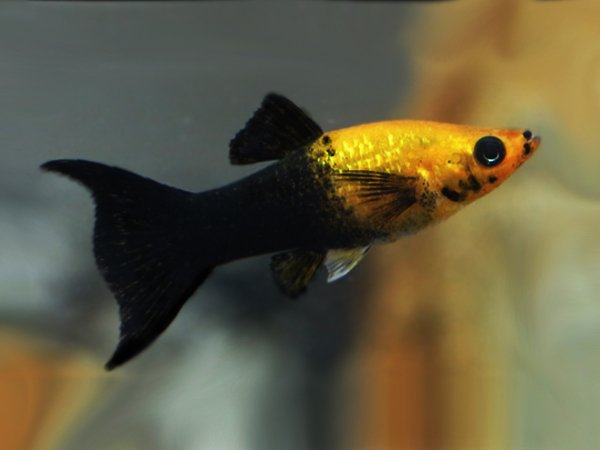
Black Gold Dust Lyretail Molly
Bring dramatic contrast and exceptional elegance to your community aquarium with the Gold Black Lyretail Molly. Featuring a striking two-tone color gradient—typically a bright, metallic gold front half that melts into a deep velvet-black tail—this fish stands out in any aquascape.
What sets this variety apart is its elegant lyretail, where the top and bottom rays of the caudal (tail) fin extend into elongated, sweeping points. Highly active and naturally curious, these livebearers are excellent community fish that constantly browse the tank, providing both visual interest and practical algae-grazing
We make sure all our fishes are kept with highest living standards with proper aquarium water care. Our fishes are quarantined before they are introduced to the store display aquariums. We make sure we sell healthy live fish and not parasites.
NOTE: OUR LIVE FISHES ARE ONLY DELIVERED TO DUBAI AND SHARJAH.
CUSTOMERS FROM ABUDHABI AND OTHER EMIRATE MAY CONTACT US TO
د.إ5.99
Parameter Dust Lyretail Ideal Range
Scientific NamePoecilia sphenops var.
Adult Size3 to 4.5 inches (7.5 to 11.5 cm)
Minimum Tank Size20 Gallons (approx. 80 Liters) for a small group
Water Temperature72°F to 82°F (22°C to 28°C)
pH Range7.5 to 8.2 (Strictly prefers alkaline water)
Water Hardness10 to 25 dGH (Hard water is essential)
DietOmnivorous (Heavy emphasis on plant matter and algae)
Comprehensive Care & Tank Setup Guide
1. Water Chemistry and Hardness
Unlike many tropical fish that prefer soft, acidic setups, Mollies originate from environments with mineral-rich, hard water.
The Hardness Factor: Hard water (>10\text{ dGH}) and an alkaline pH (7.5\text{–}8.2) are non-negotiable for their long-term health. In soft water, their immune systems weaken, making them highly susceptible to diseases like “shimmies” or ich.
Salt (Optional but Beneficial): While the Gold Black Molly thrives in pure freshwater if the mineral content is high, they can also comfortably inhabit brackish water. Adding a small amount of aquarium salt can boost slime coat production and general health, though it isn’t strictly necessary if your tap water is naturally hard.
2. Diet, Grazing, and Algae Control
Mollies have a high digestive requirement for vegetable matter.
Daily Feeding: Feed a high-quality spirulina-based flake or pellet as their staple food.
Natural Grazing: They are exceptional utility fish. They spend all day picking at hair algae, biofilm, and even surface film across rocks, glass, and plant leaves. Supplement their diet occasionally with frozen brine shrimp or bloodworms for protein, but ensure greens remain their primary food source.
3. Tank Mates and Livebearer Social Structure
Gold Black Lyretail Mollies are incredibly peaceful and make stellar additions to standard community aquariums, provided their tank mates share a preference for harder water.
Male-to-Female Ratio: Because males are persistent breeders, always maintain a ratio of 1 male to at least 2 or 3 females. This distributes the male’s attention and prevents any single female from becoming exhausted or stressed.
Compatible Neighbors: Excellent choices include Platies, Swordtails, Guppies, peaceful bottom-dwelling Corydoras catfish, Danios, and robust rainbowfish.
Species to Avoid: Avoid aggressive fin-nippers (like Tiger Barbs), which may target the trailing extensions of the Molly’s delicate lyretail, and fish that require soft, acidic water (like Discus or certain South American dwarf cichlids).
Related products
-
ALGAE EATING FISH, LIVE FISH
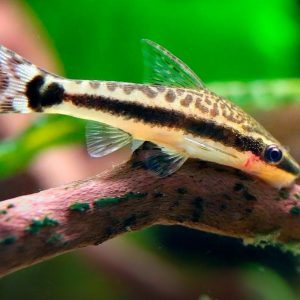
Otocinclus Algae Eater
Otocinclus Algae Grazer
We make sure all our fishes are kept with highest living standards with proper aquarium water care. Our fishes are quarantined before they are introduced to the store display aquariums. We make sure we sell healthy live fish and not parasites.
NOTE: OUR LIVE FISHES ARE ONLY DELIVERED TO DUBAI AND SHARJAH.
CUSTOMERS FROM ABUDHABI AND OTHER EMIRATE MAY CONTACT US TO
SKU: n/a -
FANCY, KOI, LIVE FISH
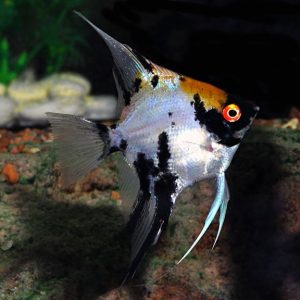
Koi Angel
We make sure all our fishes are kept with highest living standards with proper aquarium water care. Our fishes are quarantined before they are introduced to the store display aquariums. We make sure we sell healthy live fish and not parasites.
NOTE: OUR LIVE FISHES ARE ONLY DELIVERED TO DUBAI AND SHARJAH.
CUSTOMERS FROM ABUDHABI AND OTHER EMIRATE MAY CONTACT US TO
SKU: n/a