
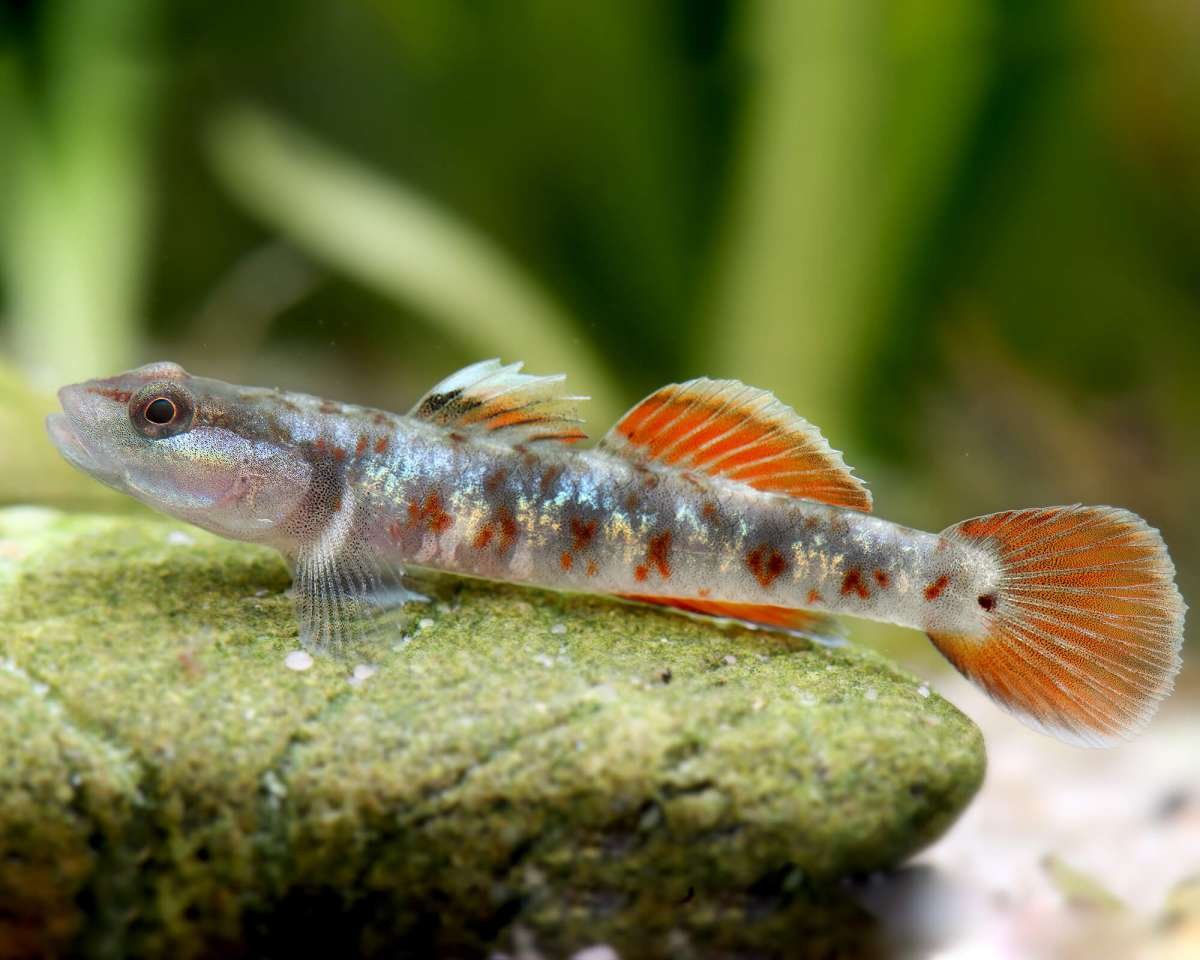
Flame Goby
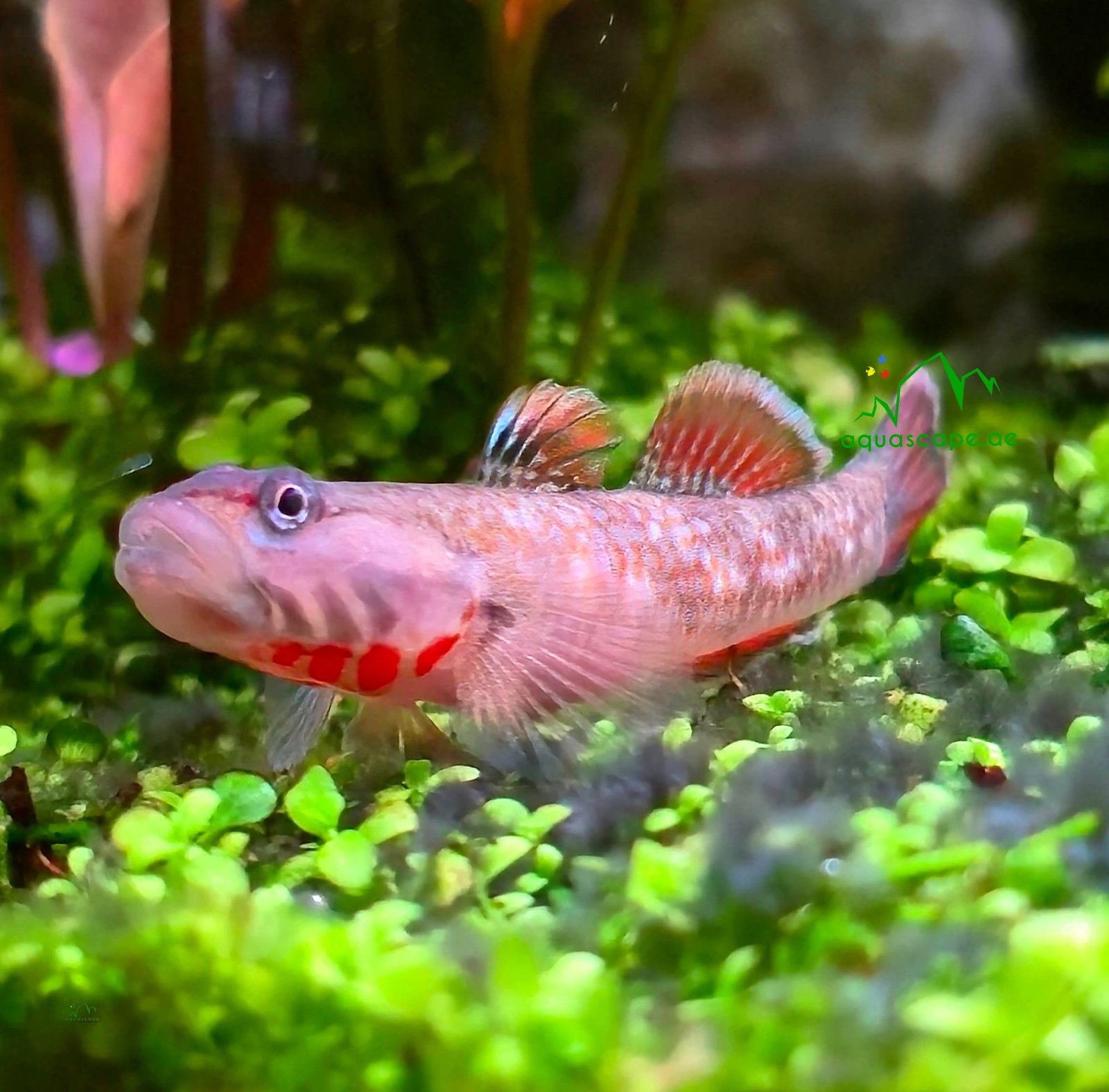
Bring a burst of fiery color and engaging personality to your aquarium with the Freshwater Flame Goby (Rhinogobius zhoui). Renowned for its striking bright red-to-orange coloration and contrasting white-edged fins, this rare nano fish is a prized addition for dedicated aquarists and nano-tank enthusiasts alike.
Unlike many passive bottom-dwellers, Flame Gobies are highly active, curious, and display fascinating hopping behaviors as they navigate rocks and substrate. Because they are native to fast-flowing, oxygen-rich streams, they bring a dynamic energy to specialized hillstream or river-tank setups
د.إ24.00
ParameterIdeal Range
- Scientific NameRhinogobius zhoui / Sicyopterus spp.
- Adult Size1.5 to 2.5 inches (4 to 6 cm)
- Minimum Tank Size15 Gallons (approx. 60 Liters)
- Water Temperature68°F to 75°F (20°C to 24°C)
- pH Range6.5 to 7.5
- Water Hardness5 to 12 dGH
- DietCarnivorous
Comprehensive Care & Tank Setup Guide
1. Tank Setup and Habitat Requirements
To thrive, Flame Gobies require an environment that mimics their natural hillstream habitats.
Substrate: Use smooth sand or fine gravel. Avoid sharp substrates, as these fish spend their lives resting directly on the bottom and can damage their bellies.
Decor: Provide plenty of smooth river stones, rocks, and driftwood. These surfaces allow them to establish small territories and graze naturally.
Water Flow & Oxygenation: This is critical. Flame Gobies require high water turnover and excellent oxygenation. The use of an oversized filter, powerhead, or air stones to create a noticeable directional current is highly recommended.
2. Diet and Feeding
Flame Gobies are primarily micro-predators but will also graze on natural biofilm forming on rocks.
Preferred Foods: Live or frozen foods such as bloodworms, brine shrimp, daphnia, and tubifex worms.
Dry Foods: They can be finicky with processed foods. They may eventually accept high-quality, sinking carnivorous pellets or wafers, but frozen or live foods should remain their staple diet.
3. Temperament and Tank Mates
While generally peaceful toward other species, male Flame Gobies can be highly territorial with one another.
Intraspecific Behavior: If keeping multiple males, ensure the aquarium is large enough (20+ gallons) with visual barriers (rocks/plants) so they can establish distinct territories.
Ideal Tank Mates: Peaceful, fast-moving species that enjoy cooler water and high flow. Good choices include Hillstream Loaches, White Cloud Mountain Minnows, Danios, and peaceful freshwater shrimp (though very small shrimplets may be eaten).
Species to Avoid: Large, aggressive, or slow-moving fish that cannot handle high water flow, as well as oversized bottom-dwellers that might compete aggressively for territory.
Related products
-
LIVE FISH, Shrimps
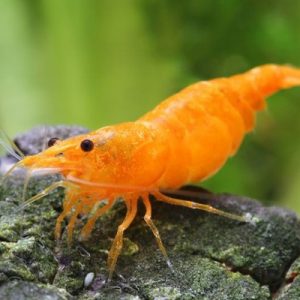
Sunkist Shrimp
Our Sunkist Shrimp are maintained with highest quality standard so that we deliver our best to you.
We make sure all our fishes are kept with highest living standards with proper aquarium water care. Our fishes are quarantined before they are introduced to the store display aquariums. We make sure we sell healthy live fish and not parasites.
NOTE: OUR LIVE FISHES ARE ONLY DELIVERED TO DUBAI AND SHARJAH.
CUSTOMERS FROM ABUDHABI AND OTHER EMIRATE MAY CONTACT US TO INQUIRE ABOUT THE DELIVERY.
SKU: n/a -
FANCY, LIVE FISH, NATURE AQUARIUM FISH
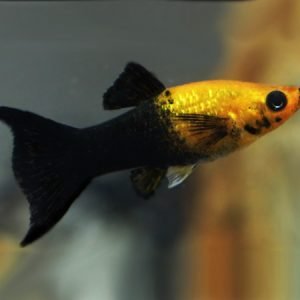
Black Gold Dust Lyretail Molly
Bring dramatic contrast and exceptional elegance to your community aquarium with the Gold Black Lyretail Molly. Featuring a striking two-tone color gradient—typically a bright, metallic gold front half that melts into a deep velvet-black tail—this fish stands out in any aquascape.
What sets this variety apart is its elegant lyretail, where the top and bottom rays of the caudal (tail) fin extend into elongated, sweeping points. Highly active and naturally curious, these livebearers are excellent community fish that constantly browse the tank, providing both visual interest and practical algae-grazing
We make sure all our fishes are kept with highest living standards with proper aquarium water care. Our fishes are quarantined before they are introduced to the store display aquariums. We make sure we sell healthy live fish and not parasites.
NOTE: OUR LIVE FISHES ARE ONLY DELIVERED TO DUBAI AND SHARJAH.
CUSTOMERS FROM ABUDHABI AND OTHER EMIRATE MAY CONTACT US TO
SKU: n/a -
BETTA, LIVE FISH
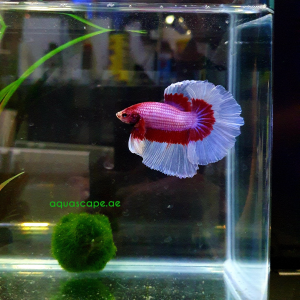
Pink Candy Betta
We make sure all our fishes are kept with highest living standards with proper aquarium water care. Our fishes are quarantined before they are introduced to the store display aquariums. We make sure we sell healthy live fish and not parasites.
NOTE: OUR LIVE FISHES ARE ONLY DELIVERED TO DUBAI AND SHARJAH.
CUSTOMERS FROM ABUDHABI AND OTHER EMIRATE MAY CONTACT US.
Deliveries can take 4 to 7 days depending upon the availability of stocks.
SKU: n/a -
LIVE FISH, SCHOOLING FISH
CARDINAL TETRA
Cardinal Tetras are small, colorful and peaceful fish that are popular among aquarium enthusiasts.
Here are some tips on how to take care of them:
Tank Size: Cardinal Tetras require a minimum of 10 gallons tank size, with a pH range of 5.0 to 7.0.
Water Parameters: They prefer soft and slightly acidic water with a temperature range of 72-82°F.
Tank Mates: Cardinal Tetras are peaceful fish and should be kept with other peaceful fish such as other tetras, rasboras, and small catfish.
Diet: They are omnivorous and require a balanced diet of high-quality flakes, pellets, and frozen foods such as bloodworms and brine shrimp.
Decorations: Provide them with plenty of hiding spots such as plants, driftwood, and rocks. They also prefer a dark substrate.Maintenance: Regular water changes of 25% every two weeks are recommended to maintain good water quality.
Breeding: Cardinal Tetras are difficult to breed in captivity. It is best to purchase them from a reputable breeder or retailer.
By following these tips, you can provide a healthy and comfortable home for your Cardinal Tetras.
NOTE: OUR LIVE FISHES ARE ONLY DELIVERED TO DUBAI AND SHARJAH.
CUSTOMERS FROM ABUDHABI AND OTHER EMIRATE MAY CONTACT US TO INQUIRE ABOUT THE DELIVERY.SKU: n/a