
Eriocaulon quinquangulare TC cup
Out of stock
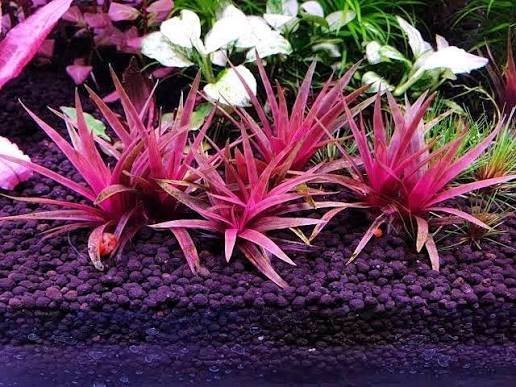
Eriocaulon quinquangulare is a unique and attractive aquatic plant belonging to the Eriocaulaceae family. Native to regions like India, Sri Lanka, and Southeast Asia, it thrives in wetlands, marshes, and shallow waters. This plant is known for its rosette-forming growth and striking star-shaped flowers (when grown emersed).
Description:
-
Leaves: Thin, grass-like, forming a dense rosette.
-
Stems: Short, with flower stalks emerging from the center when grown emersed.
-
Flowers: Small, white to pale yellow, with a star-like appearance (only when grown above water).
-
Size: Typically 5–15 cm tall, depending on growing conditions.
-
Growth: Slow to moderate, preferring stable water conditions.
-
Temperature: 20–28°C (68–82°F).
-
pH: 5.5–7.0 (slightly acidic to neutral).
-
Hardness: Soft to moderately hard water (GH 4–10, KH 1–6).
-
CO₂: Benefits from CO₂ injection (20–30 ppm) for optimal growth.
د.إ53.10 د.إ59.00
Out of stock
Eriocaulon quinquangulare is a rare, highly sought‑after rosette plant originating from India and surrounding regions. It has recently entered the aquarium hobby and is prized for its compact size, unique coloration, and refined, grass‑like structure.
Key Characteristics
– Growth Form: Dense rosette plant with thin, needle‑like leaves
– Size: Submerged adult plants typically reach 2.5–3 inches (6–7.5 cm) tall
– Coloration:
– Reddish at the base
– Leaves fade to olive/orange toward the tips
– Texture: Leaves are delicate and easily crushed; handle with care
– Emersed Form: Produces star‑shaped white/yellow flowers when grown above water
—
💧 Care Requirements
☀️ Lighting
– Requires very bright light for healthy growth and coloration
– Should not be shaded — low light causes melting and stunting
🌿 CO₂
– Needs strong CO₂ injection directed toward the substrate zone for best results
– As a short plant, CO₂ distribution near the base is critical.
🌡️ Temperature
– Thrives in 20–28°C water temperatures
⚗️ Water Parameters
– pH: 5.5–7.0 (slightly acidic to neutral)
– KH: Sensitive to alkalinity; prefers low KH water
– Substrate: Grows extremely well in ammonia‑rich aquasoils
🌊 Growth Rate
– Slow to moderate growth, but steady under stable conditions
✂️ Maintenance
– Remove old or melting leaves to prevent rot.
– Avoid frequent uprooting — the plant is delicate and easily damaged.
🌾 Propagation
– Propagates by dividing the rosette or through side shoots (rare).
– Tissue culture forms may melt initially and regrow under proper conditions.
—
🎨 Aquascaping Notes (tailored for you, ISMAIL)
Given your precision and love for high‑end layouts:
– Perfect as a foreground focal rosette in nature‑style or diorama scapes.
– Its reddish base contrasts beautifully with bright greens like Eleocharis acicularis or Hydrocotyle tripartita.
– Works well in Iwagumi layouts where each plant must hold visual weight despite small size.
– Because it’s delicate, place it in areas with gentle but direct flow.
—
⚠️ Important Challenges & Tips
– Melting is common after planting — patience is key.
– Needs stable parameters; fluctuations in CO₂ or KH cause decline.
– Avoid shading from taller stems; this species demands open light.
Related products
-
Plants, Tissue Culture Cup
Aquascapeplants Hygrophila pinnatifida
Maharashtra, Goa, Karnataka, Tamil Nadu are the states in India where Hygrophila pinnatifida is commonly found. However in the books its origin is from North India state of India, Uttar Pradesh.
- 3x times more plant quantity than other leading brands..
- Artistic leave pattern
- To artistic to be believed real
- Can be planted in soil or attached to the hardscape
- Relatively easy to grow and care
Synonyms Nomaphila pinnatifida Dalzell, Cardanthera pinnatifida (Dalzell) Benth. ex C.B.Clarke . Complete botanical name Hygróphila pinnatífida (Dalzell) Sreem. Family Acanthaceae Genus Hygrophila Difficulty medium Usage Epiphyte (growing on hardscape), Semi-emersed plant for open tanks, Midground, Foreground, group Height 5 – 40cm Width 10 – 30cm Growth medium Buy 5 or more for additional discount!
Buy 10 or more to get super discount!
SKU: n/a -
Plants, Tissue Culture Cup
Aquascapeplants Vesicularia ferriei ‘Weeping Moss’
Weeping moss is said to be originated from China and is very popular in the aquarium industry as they have dark hue and overhanging growth.
- Easy to maintain
- Overhanging growth
- Dark green color
Complete botanical name Vesiculária ferriei (Cardot & Thér.) Broth. Family Hypnaceae Genus Vesicularia Difficulty easy Usage Epiphyte (growing on hardscape), Nano tanks Growth slow SKU: n/a -
Plants, Tissue Culture Cup
Aquascapeplants Pogostemon erectus
Pogostemon erectus is a dense growing plant with needle type leaves, originating from India.
- Compact growth patter
- Needle type leaves
- Ideal for nano tanks
- Green lush color
Synonyms Dysophylla erecta Dalzell, Eusteralis erecta (Dalzell) Panigrahi Complete botanical name Pogostémon eréctus (Dalzell) Kuntze Family Lamiaceae Genus Pogostemon Difficulty medium Usage Background Aquascaping fine-leaved Growth fast SKU: n/a -
Plants, Potted
Aquascapeplants Pogostemon erectus
Size: Pot
Pogostemon erectus was originally collected for agriculture in western Maharashtra a state in India, and recently started to be used in aquariums.
- Light green leaves
- Bushy growth
- pointed, neadle like leaves
- sharp vertical growth
Synonyms Dysophylla erecta Dalzell, Eusteralis erecta (Dalzell) Panigrahi Family Lamiaceae Genus Pogostemon Difficulty medium Usage Background Aquascaping fine-leaved Growth fast Buy 5 or more for additional discount!
Buy 10 or more to get super discount!
SKU: n/a